
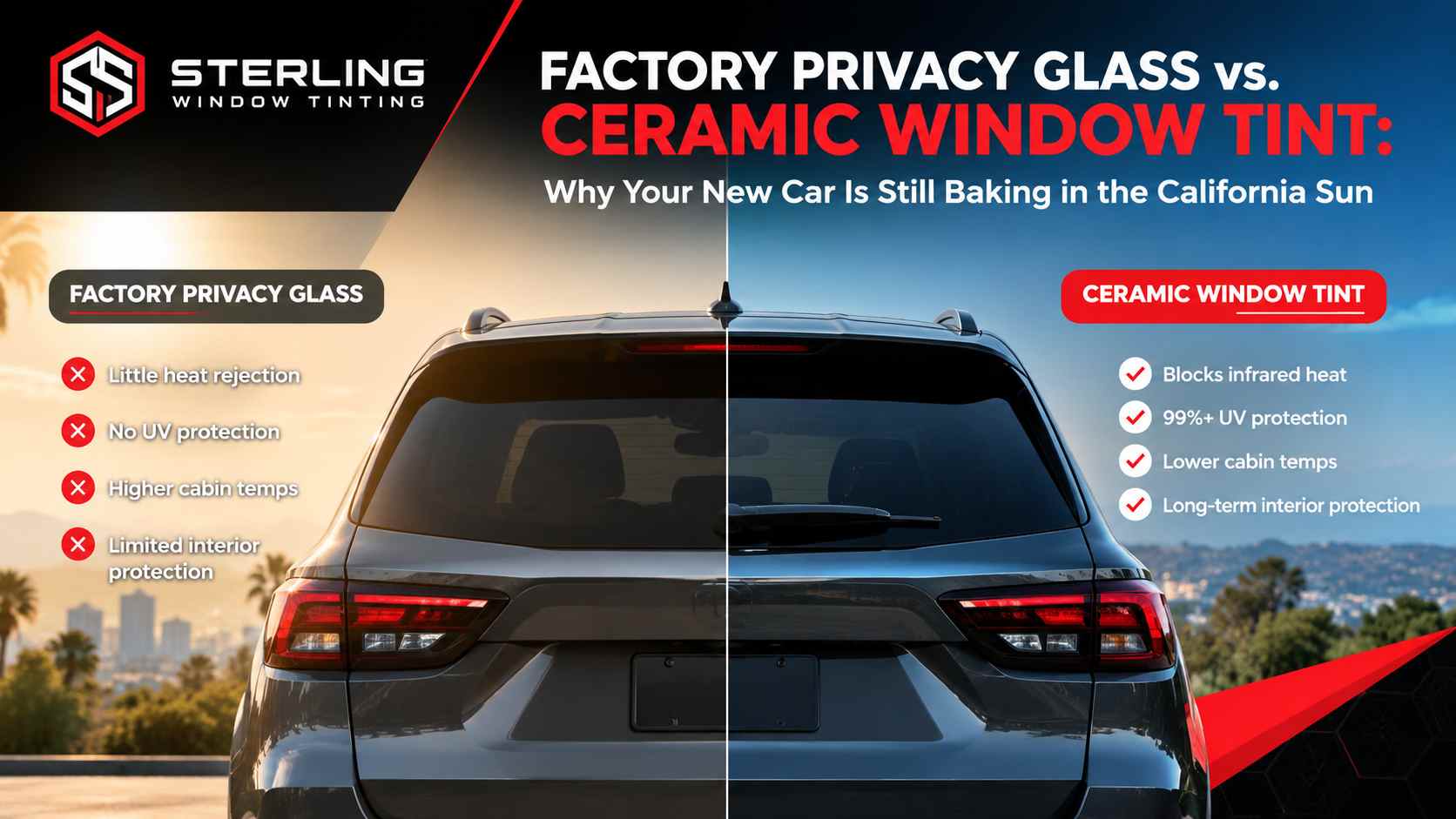
Your new car has dark rear windows straight from the factory. You assume you are covered. Then you park in a Sacramento lot for two hours, open the door, and the cabin feels like a furnace. Here is the truth: factory privacy glass and ceramic window tint are not the same thing. One is built for looks. The other is engineered for performance. If you are driving through California’s intense heat season without understanding the difference, your vehicle’s interior is paying the price.
What Is Factory Privacy Glass?
Factory-tinted windows are darkened during the glass manufacturing process itself. Automakers add a pigment or dye directly into the glass, primarily on rear and quarter windows. The result is a dark appearance that provides privacy and reduces the amount of visible light entering the cabin.
What factory glass does not do is meaningfully reject solar heat. The darkening process improves privacy, but it is not engineered to block infrared heat rejection or filter the solar energy spectrum that raises cabin temperatures. Your rear windows can be near-black from the factory, and your car can still reach interior temperatures exceeding 130 degrees on a California summer afternoon.
This is the core misunderstanding that leads thousands of California drivers to skip aftermarket tinting on a car that already looks tinted.
What Is Ceramic Window Tint and How Does It Work?
Nano-ceramic window film is an aftermarket window film engineered specifically to combat solar energy. Unlike dyed films that simply darken the glass, ceramic film uses advanced ceramic particles that are non-conductive and non-metallic. These particles intercept and reject solar energy at the molecular level, stopping heat before it passes through the glass into the cabin.
The key performance metric to understand is Total Solar Energy Rejected, or TSER. TSER measures how much of the sun’s total combined energy a film rejects, including visible light, infrared radiation, and UV rays. A higher TSER rating means better car interior temperature reduction and a noticeably cooler driving experience.
Quality ceramic film also delivers UV ray protection at 99% or above, blocking the ultraviolet rays responsible for fading dashboards, cracking leather, and deteriorating interior materials over time. Factory privacy glass offers no meaningful protection against UV degradation.
Factory Privacy Glass vs Ceramic Tint: Side by Side
Here is how the two compare across the metrics that matter most to California drivers:
| Feature | Factory Privacy Glass | Ceramic Window Tint |
| Privacy | Yes | Yes |
| Infrared Heat Rejection | Minimal | High |
| UV Ray Protection | Low | 99%+ |
| TSER Rating | Low | High |
| Interior Protection | Limited | Comprehensive |
| Front Window Coverage | None | Available |
| California Legal | Yes | Yes, when installed correctly |
Can Ceramic Tint Be Applied Over Factory Privacy Glass?
Yes, and this is actually one of the most practical upgrades available for new car owners. A clear or lightly shaded ceramic window film applied over existing factory privacy glass adds a full layer of solar energy protection without dramatically changing the appearance of the vehicle.
The rear glass keeps its factory dark look while gaining genuine infrared heat rejection and UV-blocking capability. For the front side windows, which typically have no factory tint at all, ceramic film provides consistent protection across all four windows and reduces the sharp contrast between the dark rear and clear front glass.
Adding anti-glare window film to the front windows also reduces the harsh sun angle that Sacramento drivers deal with during morning and afternoon commutes. Every LLumar ceramic window film installation at Sterling Window Tinting is measured against California legal tint limits before installation to ensure full compliance with CVC 26708.
Ceramic Film Benefits for SUVs and Trucks in Sacramento
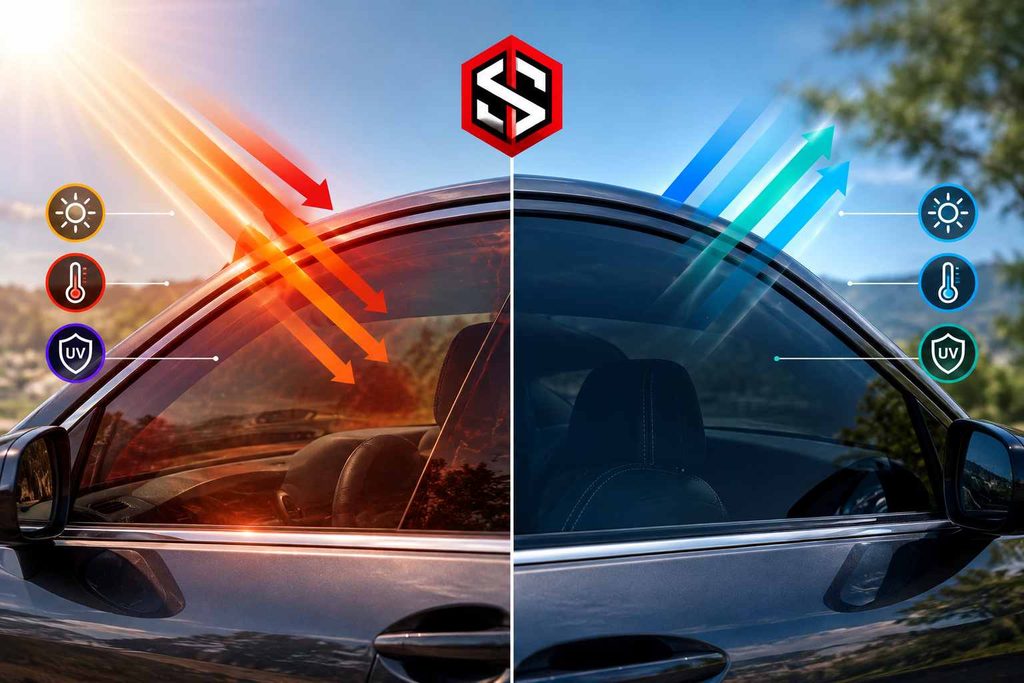
Larger vehicles with more glass surface area have more exposure to solar heat. SUVs and trucks with panoramic roofs, large rear windows, and wide windshields absorb significantly more infrared radiation than compact cars. Custom SUV window tinting that combines existing factory privacy glass with a premium ceramic film delivers whole-cabin heat management rather than partial coverage.
For Sacramento area drivers who use their trucks for work and leave vehicles parked outdoors for extended periods, heat-rejection window tint pays for itself quickly in reduced air conditioning load and better preservation of upholstery, dashboards, and electronics sensitive to prolonged heat exposure.
Is Ceramic Window Tint Worth the Cost?
Ceramic window tint installation cost is higher than basic dyed film. That difference reflects the technology behind the product. You are paying for ceramic particles that intercept infrared radiation, a non-metallic construction that does not interfere with phone signals or GPS, and a warranty-backed film that will not fade, bubble, or turn purple over time.
When researching auto glass tinting options in Sacramento, look beyond the price per window. Ask any installer about the film’s TSER rating, infrared heat rejection percentage, visible light transmission level, UV rejection percentage, warranty terms, and whether the installation will keep your vehicle within California legal tint limits on front side windows.
A quality installer answers all of those questions before touching your vehicle. Sterling Window Tinting installs LLumar ceramic window film exclusively because it consistently delivers on every one of those metrics and is backed by a manufacturer warranty.
Frequently Asked Questions
Does factory privacy glass block heat?
Factory privacy glass reduces visible light and provides privacy, but it is not designed to block infrared radiation or reject total solar energy. A vehicle with dark factory glass can still reach extreme interior temperatures after sitting in direct California sunlight.
Can ceramic tint be installed over factory privacy glass?
Yes. A clear or lightly tinted ceramic film over factory privacy glass adds meaningful heat rejection and UV protection without changing the existing appearance. This is one of the most effective upgrades for new vehicles in hot climates like Sacramento.
How much cooler can ceramic tint make a car?
Results vary based on the vehicle, glass type, film selected, and installation quality. High-performance ceramic films with strong TSER ratings can reduce cabin temperatures by 20 to 30 degrees compared to unprotected or factory-glass-only vehicles parked in direct sunlight.
Is ceramic tint legal in California?
Yes. Ceramic tint is California-legal when installed at the correct VLT levels. Front side windows require a minimum of 70% visible light transmission. A professional installer measures the existing glass first to ensure the combined VLT reading stays within California legal tint limits after the film is applied.
Do I need a certificate after ceramic tint installation?
Yes. California requires a signed certificate from a licensed installer confirming the film meets legal VLT requirements. The certificate must include the manufacturer name and VLT percentage of the film installed. Sterling Window Tinting provides this documentation with every installation.
Get Cooler, Safer, and Smarter Protection for Your Vehicle in Sacramento
Sacramento drivers no longer have to choose between a factory look and genuine heat protection. Sterling Window Tinting installs premium LLumar ceramic film over any factory glass configuration, ensuring your vehicle stays cooler, your interior stays protected, and your installation stays fully within California legal requirements. Book your free consultation at Sterling Window Tinting and get it done right the first time.